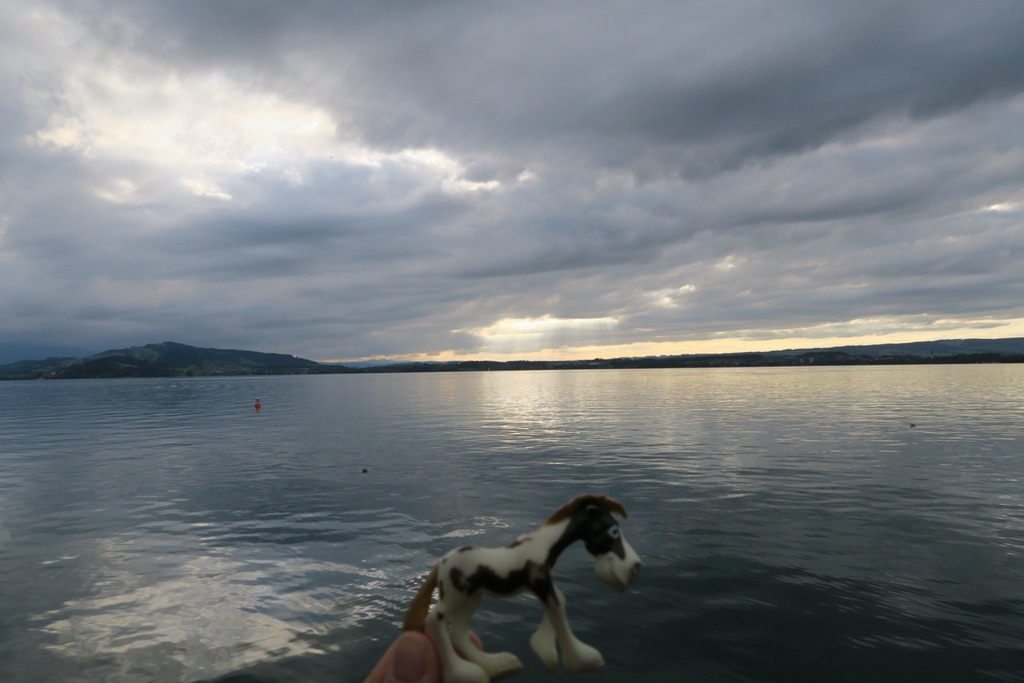
Switzerland is a small country and a large part of it is covered by high mountains and lakes. Every plot of land is expensive and people look to use it in the best way. As a result there are only a few public parks where families can enjoy a sunny afternoon.
Gottlieb Duttweiler, a successful businessman knew about it. He has founded in 1925 a retail company called Migros, which was to become the most important grocery chain in Switzerland. From the very beginning he had in mind something only few businessmen thought of at that time, and what is called today the corporate social responsibility. He has created Klubschule, an organisation offering courses and education for large audience. He has decided that a percentage of the revenues (not profits!) of Migros will be used to found cultural events through the Migros Kulturprozent. In 1941 he has transferred the ownership of Migros to its customers, transforming a corporation into a cooperative. Finally, last but not least, in 1946 he has donated a large plot of land in the town of Rüschlikon, transforming it in a public park, open to everyone without any access fee. Today, it will be my pleasure to take you to Park im Grüene.
The area is quite large. It includes a large lawn where you can enjoy the sun, play the ball or have a picnic.
The children can enjoy a playground with some slides, swings and constructions to climb.
There is also a nice cafeteria where you can enjoy a snack or even have a full lunch (from the Migros restaurant of course).
Next to the main path, you will find a stone dedicated to the founders, Gottlieb Duttweiler and his wife Adele.
Further back there is an observations deck.
From there you can see a great panorama of the Zurich Lake and of all the small towns on its shore.
There is even an guide which helps identifying the most important spots.
Can you please follow me outside the park itself? I want to show you one more place related to Mr Duttweiler.
No, I did not mean the Migros supermarket. I meant the orange building in the back. The path that leads to it shows the highlights of the history of Migros.
Here comes year 1925, there Migros was founded.
In 1957 the Migros Bank (yes! they even have a bank!) and the Migros Kulturprozent were initiated.
Next to it comes the Migros Hall of Fame, featuring some of the most important products sold by Migros. Featuring them in green style of course. Do you fancy a cup of coffee?
Or maybe a bit of chocolate?
Finally, we arrive to the Oranger garten, which exhibits the history of Migros.
Inside you can find an interactive wall. By choosing a particular product you can select one of the highlights of the Migors history.
The washing powder was hiding year 1945.
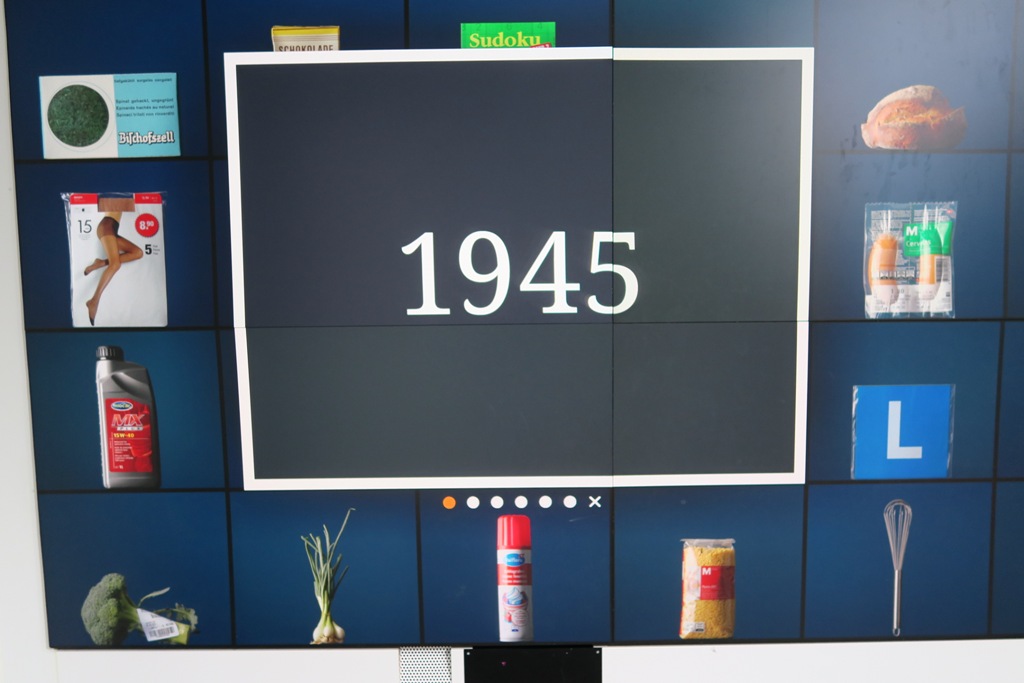
Historical pictures appear.
Then another amazing story is shared with the visitors. In 1945, to make oil more affordable for its customers, Gottlieb Duttweiler founded an oil refinery.
It still operates and remains one of very few refineries which are not owned by big oil companies.
I must admit I was really impressed by the heritage of Gottlieb and Adele Duttweiler. They were real visionaries, whose names will never be forgot in Switzerland. Now I propose that we go back to the park and enjoy some nice time in the green.
Saturday, 21 May 2016
Saturday, 14 May 2016
Zug
Today we will visit the Swiss town of Zug, the capital of the canton of Zug.
In modern German, the word "zug" means "train". In the Middle Ages it meant the right to fishing. And yes, the town of Zug (in the canton of Zug) lies on the border of the Lake Zug. The local people are not excessively creative when it comes to names.
Next to the lake you will find a small park.
You can also relax on the banks that are decorated with vibrant colours.
They contrast with the white feathers of the swans.
They are so popular in Zug that they even have a monument here!
The town of Zug was founded around year 1 200. Its old town is not very impressive. You can enter it by the Zytturm, 52 meters high tower, built in tne thirteenth century.
The residential buildings look similar.
Even the Town Hall does not stand apart. I would not guess this is an important building if there would be no sign on the wall.
The streets of the old town are narrow, leaving just enough space for a larger carriage.
This one is a bit nicer than the others.
Obviously the town has some churches as well. Like in all Swiss cities, towns and villages, you can find here catholic churches. This one is devoted to Saint Oswald.
Just next to them, you can find protestant churches. You can tell them apart thanks to the fact that catholic churches have on their towers a cross and the protestant ones have a rooster. The golden rooster is a symbol of Jesus Christ who breaks the power of the darkness, forgives sins and calls for a new day. Like the rooster who called when Saint Peter denied knowing his Lord.
I propose that we go now back to Lake Zug, there is one more thing I want to show you.
Have you noticed this strange structure?
And yes, this is actually a door to a tunnel that goes inside the lake.
Let's go down to see what journey it offers. Well, the road is not long but taking it you will be able to peep into the life of the inhabitants of the lake.
I have a feeling they have noticed us and try to get in contact. From their perspective we can probably say that we are inside a huge aquarium, protected by a glass wall.
I hope that you have enjoyed the small and calm town of Zug. Before going home I propose that we take a few steps on the pier.
Why don't we sit here for a moment and enjoy the view. Mountains, water, sunset. What can be better?
P.S. My human family made me realise that there is something better. Zug is not only a low tax area. It is also the capital of the kirsch cake. I propose we take a little step sideways and taste it a bit.
In modern German, the word "zug" means "train". In the Middle Ages it meant the right to fishing. And yes, the town of Zug (in the canton of Zug) lies on the border of the Lake Zug. The local people are not excessively creative when it comes to names.
Next to the lake you will find a small park.
You can also relax on the banks that are decorated with vibrant colours.
They contrast with the white feathers of the swans.
They are so popular in Zug that they even have a monument here!
The town of Zug was founded around year 1 200. Its old town is not very impressive. You can enter it by the Zytturm, 52 meters high tower, built in tne thirteenth century.
The residential buildings look similar.
Even the Town Hall does not stand apart. I would not guess this is an important building if there would be no sign on the wall.
The streets of the old town are narrow, leaving just enough space for a larger carriage.
This one is a bit nicer than the others.
Obviously the town has some churches as well. Like in all Swiss cities, towns and villages, you can find here catholic churches. This one is devoted to Saint Oswald.
Just next to them, you can find protestant churches. You can tell them apart thanks to the fact that catholic churches have on their towers a cross and the protestant ones have a rooster. The golden rooster is a symbol of Jesus Christ who breaks the power of the darkness, forgives sins and calls for a new day. Like the rooster who called when Saint Peter denied knowing his Lord.
I propose that we go now back to Lake Zug, there is one more thing I want to show you.
Have you noticed this strange structure?
And yes, this is actually a door to a tunnel that goes inside the lake.
Let's go down to see what journey it offers. Well, the road is not long but taking it you will be able to peep into the life of the inhabitants of the lake.
I have a feeling they have noticed us and try to get in contact. From their perspective we can probably say that we are inside a huge aquarium, protected by a glass wall.
I hope that you have enjoyed the small and calm town of Zug. Before going home I propose that we take a few steps on the pier.
Why don't we sit here for a moment and enjoy the view. Mountains, water, sunset. What can be better?
P.S. My human family made me realise that there is something better. Zug is not only a low tax area. It is also the capital of the kirsch cake. I propose we take a little step sideways and taste it a bit.
Etykiety:
church,
lake,
Old Town,
swans,
Switzerland
Saturday, 7 May 2016
Lago Maggiore
My human secretary did today the most thoughtless thing on Earth. She caught her backpack and run to the train, laving me in another handbag. I was calling her but of course, she only realised it when the train left the station. I was planning to ignore her for some time but the pictures she brought were so amazing that I decided to share them with you. Though I am still angry at her of course. I hope you will still enjoy this trip, even if you will not be able to admire me.
Lago Maggiore is the second biggest lake in Italy. The boat makes quite some waves so I hope that your stomachs are resistant.
The lake is dotted with islands. Some of them are very small and populated with water birds.
The crown jewels of the region are the Borromean Islands. This one is called Isola Bella, which means "the beautiful island". You will have the chance to discover yourself that the name is well deserved.
But before we discover Isola Bella, we will make a stop on the Isola dei Pescatori ("island of fishermen").
It includes a small village of fishermen and does not offer much tourist attractions. Just a few restaurants ...
... and the view! On the left you can see yet another island called Isola Madre ("mother island").
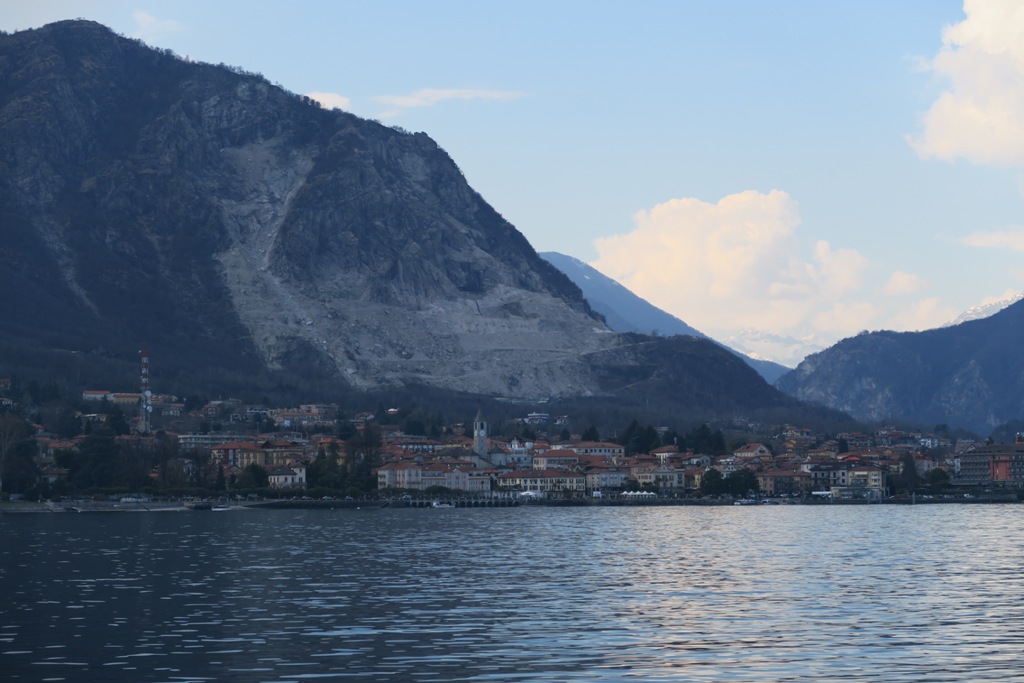
On the right - the main shore with Stresa cuddling to the mountain.
Let's return to the pier and get back on board to visit the most beautiful of the islands.
Isola Bella used to be a rocky island in the middle of the lake, until several generations of the noble family of Borromeo decided to invest heavily in turning it into a unique place.
They have built there a huge palazzo.
Inside you can really see and feel the wealth.
In the middle of the ballroom you can admire a miniature of the island.
And admire the ballroom itself of course.
Through the windows you can see the Isola dei Pescatori.
On warmer days the owners could chill out in an artificial grotto.
Or simply go to the garden.
Not impressed? Just follow me to the main entrance.
Isola Bella does not have any permanent inhabitants. Except for this gentleman.
The impressive structure in the back is called "teatro massimo", though I am not sure if it has ever been used as a theater.
The many niches are filled with some fantastic creatures and topped with, and yes, you have seen it right, a knight riding on a unicorn. Some people just do not understand the term "humble".
From the top, next to the unicorn, you can have a look at the gardens with a small pond.
Behind the teatro you will find the last plot of land on the island.
Let's go down and have a look. Wave your hand to the statues as we pass them by.
Seen from behind, the teatro is magnificent as well.
Time to go back and catch the boat returning to Stresa. Let's take the path by the wall.
The trees that you see are orange trees!
Let's just turn back and take a last look at the lake. If there is a places on Earth that are genuinely close to paradise, Lago Maggiore and Isola Bella are definitely one of them.
* * *
We will end our trip to Italy with a cruise on Lago Maggiore. We will start in a lovely village called Stresa. Everybody on board!Lago Maggiore is the second biggest lake in Italy. The boat makes quite some waves so I hope that your stomachs are resistant.
The lake is dotted with islands. Some of them are very small and populated with water birds.
The crown jewels of the region are the Borromean Islands. This one is called Isola Bella, which means "the beautiful island". You will have the chance to discover yourself that the name is well deserved.
But before we discover Isola Bella, we will make a stop on the Isola dei Pescatori ("island of fishermen").
It includes a small village of fishermen and does not offer much tourist attractions. Just a few restaurants ...
... and the view! On the left you can see yet another island called Isola Madre ("mother island").
On the right - the main shore with Stresa cuddling to the mountain.
Let's return to the pier and get back on board to visit the most beautiful of the islands.
Isola Bella used to be a rocky island in the middle of the lake, until several generations of the noble family of Borromeo decided to invest heavily in turning it into a unique place.
They have built there a huge palazzo.
Inside you can really see and feel the wealth.
In the middle of the ballroom you can admire a miniature of the island.
And admire the ballroom itself of course.
Through the windows you can see the Isola dei Pescatori.
On warmer days the owners could chill out in an artificial grotto.
Or simply go to the garden.
Not impressed? Just follow me to the main entrance.
Isola Bella does not have any permanent inhabitants. Except for this gentleman.
The impressive structure in the back is called "teatro massimo", though I am not sure if it has ever been used as a theater.
The many niches are filled with some fantastic creatures and topped with, and yes, you have seen it right, a knight riding on a unicorn. Some people just do not understand the term "humble".
From the top, next to the unicorn, you can have a look at the gardens with a small pond.
Behind the teatro you will find the last plot of land on the island.
Let's go down and have a look. Wave your hand to the statues as we pass them by.
Seen from behind, the teatro is magnificent as well.
Time to go back and catch the boat returning to Stresa. Let's take the path by the wall.
The trees that you see are orange trees!
Let's just turn back and take a last look at the lake. If there is a places on Earth that are genuinely close to paradise, Lago Maggiore and Isola Bella are definitely one of them.
Subscribe to:
Posts (Atom)