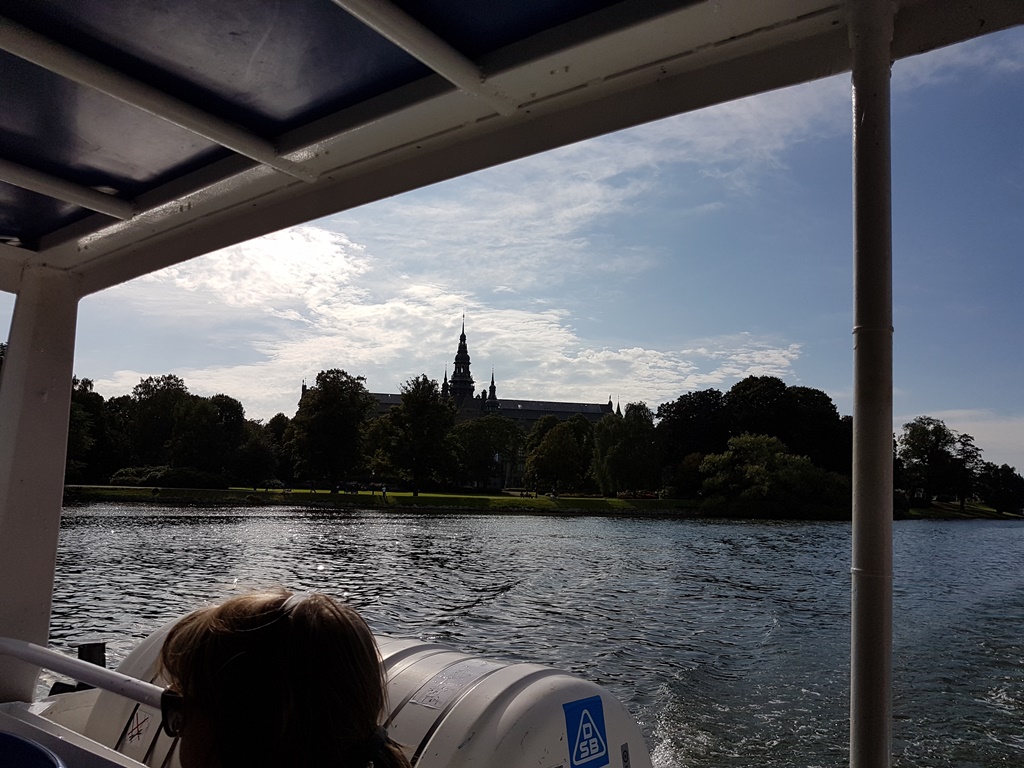
The Drottingholm Palace is the private residence of the Swedish Royal family. It is located within the confines of Stockholm,conveniently close to the city center. It was built on a small island for one of the former queens of Sweden to which it owns its name - Drottingholm means "queen's island".

The palace and its grounds have seen many renovations, changes and additions over the past 400 years. But you can still have a feeling of what it looked like when it was a vibrant place of power. This hall is the Hall od State, palaces assembly and ceremonial hall. It is decorated with portraits of the most important European heads of state from the nineteenth century.

In the library, you can find thousands of books. It was created in late eighteen century, with the help of the famous Swedish botanist Carl Linnaeus.

Let's take the official staircase. Quite impressive (as it was meant to be).

Amoung the very many chambers, we can admire the Chinese drawing room with magnificent tapestries.

Chinese motives were very popular in Europe an Sweden was no exception. You can find Chinese vases in many parts of the Drottingholm palace.

The Green Cabinet looks a bit like an ancient version of Instagram, all covered with pictures, both small ...

... and large.

This room is the State Bedchamber of queen Hedvig Eleonora. And yes, in eighteenth century a queen would receive her guests in a bedchamber.

On one side of the Drottingholm palace you will find a small lake.

And this is the backyard.

Shall we take a closer look?

The Drottingholm garden includes large alleys ...

... and narrow lanes.

This fountain, shaped like a series of waterfalls, is dedicated to king Gustav VI Adolf.

Though of course the garden is filled with numerous fountains, usually shaped into classical monuments.

Look at this path, it looks like carved in trees!

At its top you will find the Chinese pavilion.

It was a surprise gift for queen Louisa Ulrika on her 33 birthday. When a king thinks of a surprise gift, he thinks big. I only wonder how realistic it was that the woman did not get any hint of a such construction happening in her backyard (no matter how large the backyard is).

Though I guess a wise wife can be surprised whenever needed and by a gift of any size, should it be a pavilion ...

... or a bouquet.

I guess that you will not be surprised to find out that the Drottingholm Palace was inscribed by UNESCO on its World Heritage List.

It is indeed a wonderful and unique place.


The palace and its grounds have seen many renovations, changes and additions over the past 400 years. But you can still have a feeling of what it looked like when it was a vibrant place of power. This hall is the Hall od State, palaces assembly and ceremonial hall. It is decorated with portraits of the most important European heads of state from the nineteenth century.

In the library, you can find thousands of books. It was created in late eighteen century, with the help of the famous Swedish botanist Carl Linnaeus.

Let's take the official staircase. Quite impressive (as it was meant to be).

Amoung the very many chambers, we can admire the Chinese drawing room with magnificent tapestries.

Chinese motives were very popular in Europe an Sweden was no exception. You can find Chinese vases in many parts of the Drottingholm palace.

The Green Cabinet looks a bit like an ancient version of Instagram, all covered with pictures, both small ...

... and large.

This room is the State Bedchamber of queen Hedvig Eleonora. And yes, in eighteenth century a queen would receive her guests in a bedchamber.

On one side of the Drottingholm palace you will find a small lake.

And this is the backyard.

Shall we take a closer look?

The Drottingholm garden includes large alleys ...

... and narrow lanes.

This fountain, shaped like a series of waterfalls, is dedicated to king Gustav VI Adolf.

Though of course the garden is filled with numerous fountains, usually shaped into classical monuments.

Look at this path, it looks like carved in trees!

At its top you will find the Chinese pavilion.

It was a surprise gift for queen Louisa Ulrika on her 33 birthday. When a king thinks of a surprise gift, he thinks big. I only wonder how realistic it was that the woman did not get any hint of a such construction happening in her backyard (no matter how large the backyard is).

Though I guess a wise wife can be surprised whenever needed and by a gift of any size, should it be a pavilion ...

... or a bouquet.

I guess that you will not be surprised to find out that the Drottingholm Palace was inscribed by UNESCO on its World Heritage List.

It is indeed a wonderful and unique place.