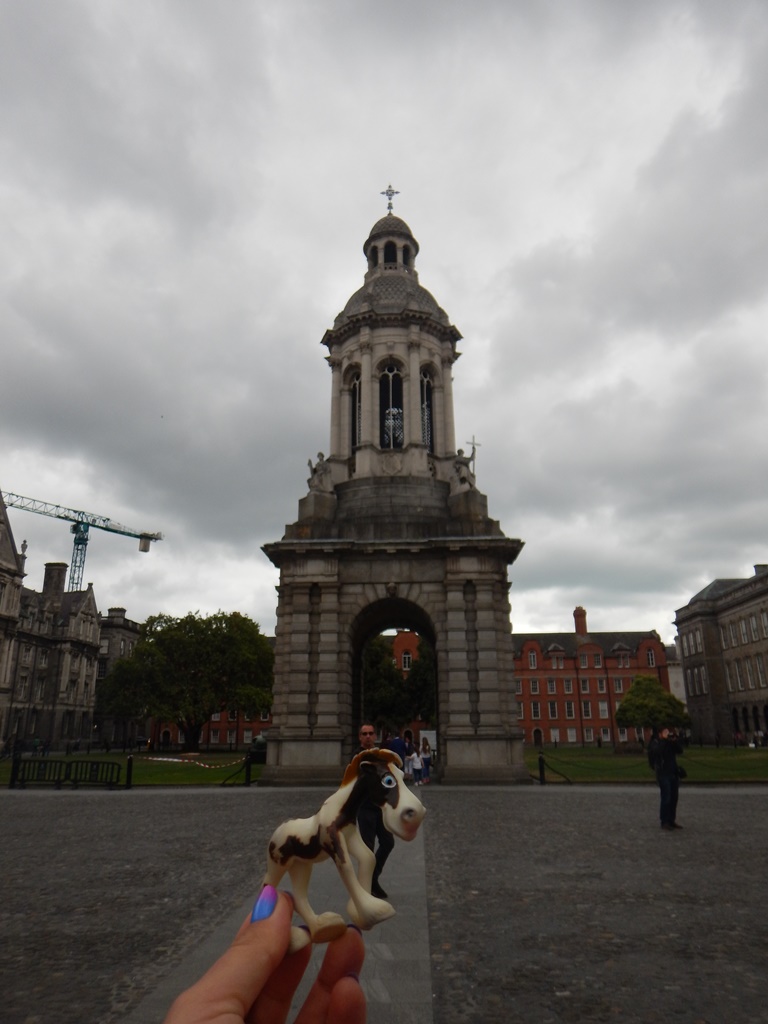
I will take you today to one of the most amazing places that I have ever visited. I am sure that if I simply told you that there is an opportunity to visit a place built by Neolithic people (so let's face it - people from stone age), you would immediately think "what could cavemen do that would be worth a one hour drive from Dublin? I'd rather stay in my pub and focus on my Guinness". Well, let me tell you that you would be wrong, all way long.
Brú na Bóinne is a UNESCO World Heritage site (and this alone should make you drink your Guinness faster!).

Boinne is the name of a river in Ireland. On its North bank, you will find three archaeological sites of Newgrange, Knowth and Dowth.

In the visitor center you can learn a lot about the life of the people who have built them. And yes, they were primitive by our standards.

They were hunters but they settled by Boinne because of fertile soils.

They lived in round shaped houses made of wood. Since wood is by far not a material that would survive centuries, most of our knowledge about those settlements is guessing.

But the presence of wood is critical for archaeologists because this allows them to use the dendrochronology or tree-ring dating. We all know that archaeologists use radiocarbon dating to estimate the age of their findings. But this method works on the assumption that the amount of carbon-14 in the atmosphere has always been the same. This is not the case, and, for certain periods, radiocarbon dates may be out by hundreds of years. This is where dendrochronology comes into play.
Certain species of tree (in Ireland mainly oak) put on a growth ring every year. The width of the ring varies depending on the climate, but all trees of the some species have the same growth pattern if they lived at the same time. By starring with living oaks and working backwards in time (examining wood from medieval structure, earlier archaeological sites, etc.) scientists can build a picture of the pattern of growth rings stretching back over seven thousand years.

And this is really vital because the sites of Brú na Bóinne are dated (radiocarbon and dendrochronology combined) to be built between 3300 and 2900 BC! So, are you ready for a trip in time? Let us cross the river then.

We will see today Newgrange, the largest of the three sites. It has 85 meters of diameter, a height of 15 meters and a passage of 19 meters that leads to the inside chamber. Quite impressive for simple cavemen.

Newgrange is a passage tomb. But generally speaking, this was no only a burial place (though they did house the bones of the ancestors). It was also a place of religious ceremonies and rituals, a place where ancestors were present and also important landmark, well visible on top of a hill. A place to impress and a place to feel proud.

The building of Newgrange took roughly three generations. Three generations of planning, arranging, organising and hard work. No cranes included. The greywacke (or grey-green sandstone) used to build Newgrange had to be transported over a pretty hilly landscape. Stones of up to two tons could be lifted by men with rope slings over shoulder posts. Heavier stones would have to be dragged on sledges of wooden rollers and pulled with ropes. It could take up to four days for 80 men to bring a four ton stone from three kilometres away.

If you have difficulties imagining the size of such a stone, compare one to a horse (though of course Europeans did not know horses over five thousand years ago).

People of Newgrange did not simply use stone as a building material. they also covered it in amazing ornaments. Many Ph.D. thesis were written about the meaning of these ornaments. But as I have been told, each of those theories is probably as good as yours. The best knows stone is in front of the entrance of the passage tomb.
But actually it is not the stone that is the most stupefying proof that Neolithic people were much smarter that you (and admittedly - me as well) though. Can you see this little window above the entrance? During the winter solstice, for six days, the morning sun enters the passage and enlightens the main chamber. Pure magic. Or actually pure science - Newgrange is offcially the oldest astronomically oriented building in the world. One thousand years older than the pyramids.

I am sure that you are not surprised that it is not allowed to take pictures inside, but I really invite you to go and see the amazing skills of the Neolithic men. If you wish, you can also enrol to a lottery. Twenty lucky winners can visit Newgrange at dawn, during the winter solstice, and admire its magic themselves.
After leaving the inner chamber, we will take a walk around the tomb. A surprisingly circular tomb.

The largest stones create a foundation that is then topped by smaller stones and finally ground.

The large stones are often ornamented. Did I mentioned that the builders of Newgrange did not have any metal tools?

I hope that you did not miss your pint of Guinness toaday and that this trip in time was for you as eye opening as for me. For sure, Newgrange will be a place that I will never forget. I only hope to be able to see it one day from bird's eye view. Today, I will need to use a shortcut only.

Brú na Bóinne is a UNESCO World Heritage site (and this alone should make you drink your Guinness faster!).

Boinne is the name of a river in Ireland. On its North bank, you will find three archaeological sites of Newgrange, Knowth and Dowth.

In the visitor center you can learn a lot about the life of the people who have built them. And yes, they were primitive by our standards.

They were hunters but they settled by Boinne because of fertile soils.
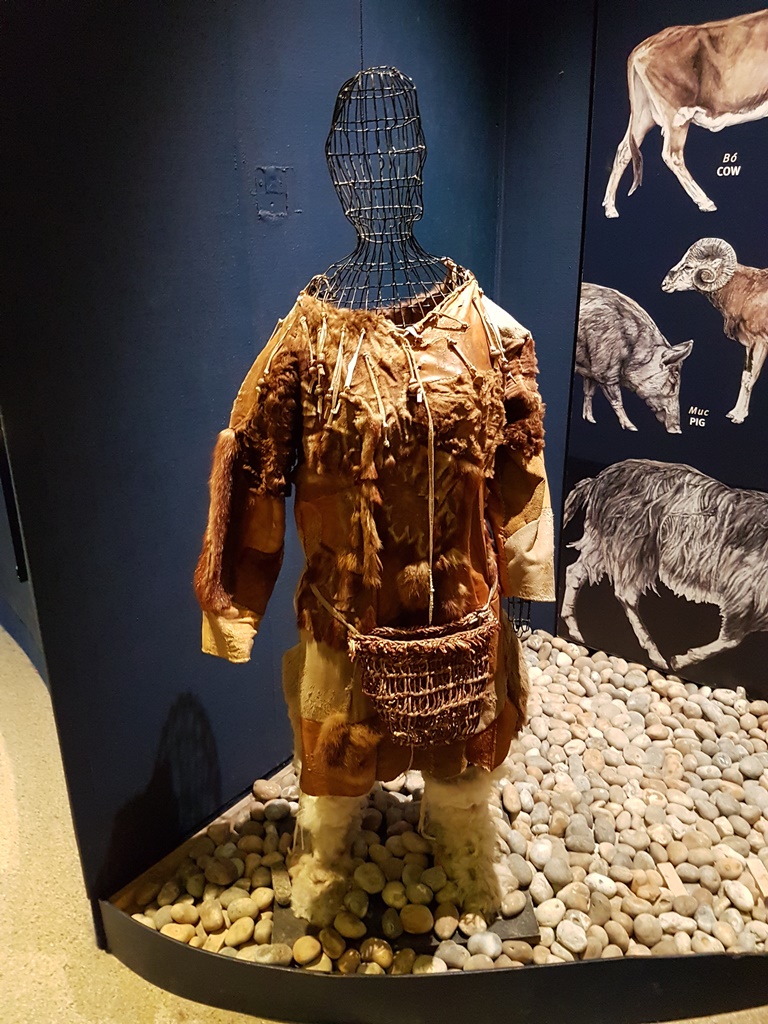
They lived in round shaped houses made of wood. Since wood is by far not a material that would survive centuries, most of our knowledge about those settlements is guessing.

But the presence of wood is critical for archaeologists because this allows them to use the dendrochronology or tree-ring dating. We all know that archaeologists use radiocarbon dating to estimate the age of their findings. But this method works on the assumption that the amount of carbon-14 in the atmosphere has always been the same. This is not the case, and, for certain periods, radiocarbon dates may be out by hundreds of years. This is where dendrochronology comes into play.
Certain species of tree (in Ireland mainly oak) put on a growth ring every year. The width of the ring varies depending on the climate, but all trees of the some species have the same growth pattern if they lived at the same time. By starring with living oaks and working backwards in time (examining wood from medieval structure, earlier archaeological sites, etc.) scientists can build a picture of the pattern of growth rings stretching back over seven thousand years.

And this is really vital because the sites of Brú na Bóinne are dated (radiocarbon and dendrochronology combined) to be built between 3300 and 2900 BC! So, are you ready for a trip in time? Let us cross the river then.

We will see today Newgrange, the largest of the three sites. It has 85 meters of diameter, a height of 15 meters and a passage of 19 meters that leads to the inside chamber. Quite impressive for simple cavemen.

Newgrange is a passage tomb. But generally speaking, this was no only a burial place (though they did house the bones of the ancestors). It was also a place of religious ceremonies and rituals, a place where ancestors were present and also important landmark, well visible on top of a hill. A place to impress and a place to feel proud.

The building of Newgrange took roughly three generations. Three generations of planning, arranging, organising and hard work. No cranes included. The greywacke (or grey-green sandstone) used to build Newgrange had to be transported over a pretty hilly landscape. Stones of up to two tons could be lifted by men with rope slings over shoulder posts. Heavier stones would have to be dragged on sledges of wooden rollers and pulled with ropes. It could take up to four days for 80 men to bring a four ton stone from three kilometres away.

If you have difficulties imagining the size of such a stone, compare one to a horse (though of course Europeans did not know horses over five thousand years ago).

People of Newgrange did not simply use stone as a building material. they also covered it in amazing ornaments. Many Ph.D. thesis were written about the meaning of these ornaments. But as I have been told, each of those theories is probably as good as yours. The best knows stone is in front of the entrance of the passage tomb.
But actually it is not the stone that is the most stupefying proof that Neolithic people were much smarter that you (and admittedly - me as well) though. Can you see this little window above the entrance? During the winter solstice, for six days, the morning sun enters the passage and enlightens the main chamber. Pure magic. Or actually pure science - Newgrange is offcially the oldest astronomically oriented building in the world. One thousand years older than the pyramids.

I am sure that you are not surprised that it is not allowed to take pictures inside, but I really invite you to go and see the amazing skills of the Neolithic men. If you wish, you can also enrol to a lottery. Twenty lucky winners can visit Newgrange at dawn, during the winter solstice, and admire its magic themselves.
After leaving the inner chamber, we will take a walk around the tomb. A surprisingly circular tomb.

The largest stones create a foundation that is then topped by smaller stones and finally ground.

The large stones are often ornamented. Did I mentioned that the builders of Newgrange did not have any metal tools?

I hope that you did not miss your pint of Guinness toaday and that this trip in time was for you as eye opening as for me. For sure, Newgrange will be a place that I will never forget. I only hope to be able to see it one day from bird's eye view. Today, I will need to use a shortcut only.