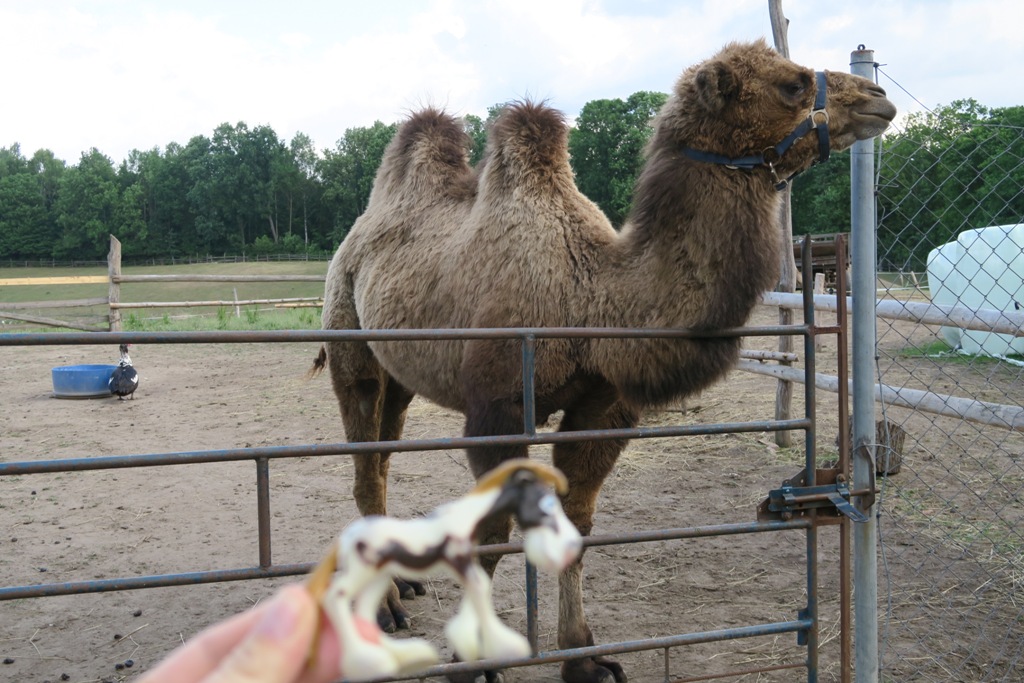
As you might have noticed, the human family in which I live is Polish. Polish people are amazing - you can get them out of Poland but you cannot get Poland out of them. As a result, when we came to swim a bit in the Zurich Lake, the first thing that they wanted to visit was the Polish Museum in Rapperswil.
The Museum is located in the Rapperswil castle.
It was created in 1870 when the Poland did not exist - it was invaded and divided between its neighbours, Russia, Prussia and Austria. Władysław Plater has then leased the Rapperswil castle to create there a safe place for some of the cultural treasures being part of the Polish national heritage. It was also a refuge for Polish patriots, both soldiers and civilians, fighting for its freedom. Many famous Polish people have spent some time living and working here, for example the famous writer Stefan Żeromski.
Let's enter inside the castle.
In the courtyard you will find a nice restaurant.
The museum is located on the second floor. Next to the entrance you can see the coats of arms of former Polish regions (voivodships).
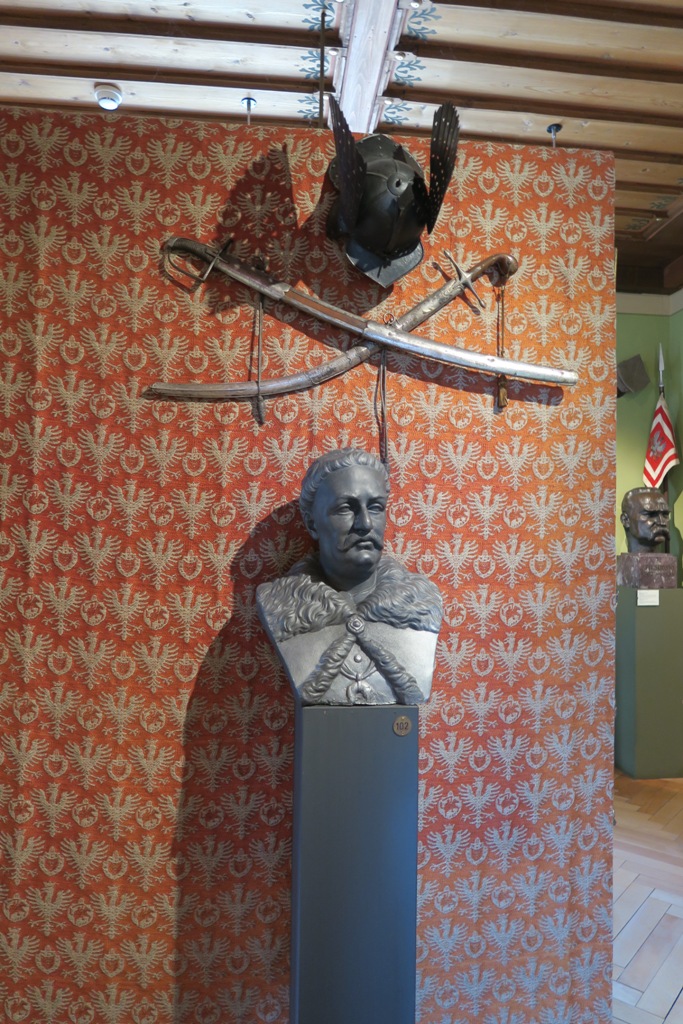
Most of the books and other historical artefacts were moved back to Poland in 1927. Unfortunately, in1944 they were burnt by German nazis together with other valuable items from Polish national heritage. Today, you just see a few items, like sabres from the times of king John III Sobieski.
You can also have a look at a few really old books, dating back to sixteenth century.
Since Rapperswil was the beating heart of Poland in days when Polish patriots were not safe in their homeland, you can see here numerous exhibitions devoted to Poles that had to flee their country in different periods. In 1830, after the November Uprising ...
... in 1940 during World War II ...
... and in 1945, when the communists took over Poland.
Recently, Poland has celebrated 25 years of (full and effective) freedom. As a result, the Rapperswil museum is slowly getting populated also with exhibitions of modern Polish art.
Before we leave the museum, I propose that we go up to the tower. It may look tough, but trust me, it is worth it.
From the top of the tower we can see a fantastic panorama of the town ...
... and the Alps in the background.
We horses live from one day to another. I am always impressed by the human ability to keep and celebrate memories. I truely recommend you to pay a visit to the Rapperswil museum. Even if you do not live with a bunch of Polish people.
Saturday, 19 September 2015
Saturday, 12 September 2015
Rapperswil
Last week we were bathing in the Zurich Lake. This week, I will show you a nice little town on its East side - Rapperswil. To arrive there, we will take the Pre-Alpine Express that runs between Lucerne and St.Gallen.
We will use it mainly to cross the Lake. As an alternative, we could also walk. Oh, no, I do not expect you to walk on water, this is not the season for miracles. Just look through the window.
And yes, there is a bridge over the lake. It is built on wooden pillars and connects Rapperswil to Hurden. Wooden pillars are of utmost importance in this area as it is part of the UNESCO World Heritage Site "Prehistoric pile dwellings around the Alps". Obviously nowadays you will not see any of these pile dwellings, and the bridge is pretty modern.
To my surprise, I have found out that the bridge and Rapperswil are on one of the many pathways to Santiago de Compostela.
Rapperswil has a nice little Old Town. The first building on the left is the Town Hall. The big inscription in the middle reminds everybody that school has started again.
The Zurich Lake lies in a valley surrounded by hills. No surprise then that all the little town are located on the banks of these hills and most of the streets go up. Let's take one of them.
On top you will find the St John's church. This is a catholic church, which is not so obvious since Zurich was one of the centers of Swiss Reformation.
Next to the church (but on the other side of the hill already) there is a little cementary.
The church was built in the thirteenth century and rebuilt many times since. You can see the influence of gothic style.
The big organ behind is again made of wood, not metal.
The ceiling is also wooden.
But the biggest surprise was not in the walls and ceilings. It was the first time that I saw a group of altar servers made predominantly of girls.
As already mentioned, the church of St. John is located on top of a hill. On a sunny day it offers a spectacular view. On one hand you can admire the Zurich Lake and the numerous villages that surround it.
On the other side - the Alps.
When you look down you can spot the Old Town ...
... and just next to it - vineyards.
And of course - the wooden bridge.
But the biggest attraction in town is located just next to the church, on the very top of the hill. It is the Rapperswil castle.
The castle in Rapperswil houses a little surprise. I will show it to you next time.
We will use it mainly to cross the Lake. As an alternative, we could also walk. Oh, no, I do not expect you to walk on water, this is not the season for miracles. Just look through the window.
And yes, there is a bridge over the lake. It is built on wooden pillars and connects Rapperswil to Hurden. Wooden pillars are of utmost importance in this area as it is part of the UNESCO World Heritage Site "Prehistoric pile dwellings around the Alps". Obviously nowadays you will not see any of these pile dwellings, and the bridge is pretty modern.
To my surprise, I have found out that the bridge and Rapperswil are on one of the many pathways to Santiago de Compostela.
Rapperswil has a nice little Old Town. The first building on the left is the Town Hall. The big inscription in the middle reminds everybody that school has started again.
The Zurich Lake lies in a valley surrounded by hills. No surprise then that all the little town are located on the banks of these hills and most of the streets go up. Let's take one of them.
On top you will find the St John's church. This is a catholic church, which is not so obvious since Zurich was one of the centers of Swiss Reformation.
Next to the church (but on the other side of the hill already) there is a little cementary.
The church was built in the thirteenth century and rebuilt many times since. You can see the influence of gothic style.
The big organ behind is again made of wood, not metal.
The ceiling is also wooden.
But the biggest surprise was not in the walls and ceilings. It was the first time that I saw a group of altar servers made predominantly of girls.
As already mentioned, the church of St. John is located on top of a hill. On a sunny day it offers a spectacular view. On one hand you can admire the Zurich Lake and the numerous villages that surround it.
On the other side - the Alps.
When you look down you can spot the Old Town ...
... and just next to it - vineyards.
And of course - the wooden bridge.
But the biggest attraction in town is located just next to the church, on the very top of the hill. It is the Rapperswil castle.
The castle in Rapperswil houses a little surprise. I will show it to you next time.
Etykiety:
Alps,
Bridge,
church,
lake,
Old Town,
reformation,
Santiago,
school,
Switzerland,
UNESCO WHS
Saturday, 5 September 2015
Badi (lake swimming pool)
When it is hot summer like today, there is nothing better from swimming in clean water. For example in the Zurich Lake. The swan on the red is the coat of arms of Horgen, one of the cities on its South bank.

Sometimes the water in the lakes is full of slime and seaweed making it uncomfortable to swim. But not here. The water is clean, the bottom is covered with stones and there are many attractions.
You can find a rowing monument.
Beautiful trees allow to relax in the shadow.
So you aren't surprised there are plenty of people there. I think not many horses live here, since I haven't met any of my cousins.
The youngest and the ones afraid of water deeper then up to the knee also have a place especially for them.
The water slide looks not too steep from the shore, ...
... but before giving it a try, you must look also from its top.
You can also use a springboard to jump in to the water. The lower is two meters high, and the higher in the back is five meters high.
So off we go (off course from the lower one :))

Sometimes the water in the lakes is full of slime and seaweed making it uncomfortable to swim. But not here. The water is clean, the bottom is covered with stones and there are many attractions.
You can find a rowing monument.
Beautiful trees allow to relax in the shadow.
There are stairs for a safe way into the water.
The youngest and the ones afraid of water deeper then up to the knee also have a place especially for them.
The water slide looks not too steep from the shore, ...
... but before giving it a try, you must look also from its top.
You can also use a springboard to jump in to the water. The lower is two meters high, and the higher in the back is five meters high.
So off we go (off course from the lower one :))
Etykiety:
lake,
sport,
Switzerland
Saturday, 29 August 2015
Nikielkowo
Summer time is a great time for travelling and visiting new place. It is however also a great time to visit family and friends. Today, I will take you to a farm that is located in a tiny little village (if you want to find it I recommend that you type into your GPS the coordinates: 20.5705 E, 53.8069 N) and looks very modest at the first sight. But do to get fooled by the first impression.
Next to the entry you will meet some typical farm animals. A turkey, proud of its necklace ...
... a few goats and sheep ...
... or some rabbits.
But then it becomes less typical. Pigs are black and hairy.
Cows are red-hair and even more hairy.
I was told that this species of cows comes originally from Scotland - the proud Highlanders collect the winter "fur" and weave it into kilts. The Highland cattle can be recognised by the long horns. The calves are obviously born hornless.
Even birds are hairy here! Just look at this chicken.
In Nikielkowo you can meet many exotic birds. Do you know how those ones are called?
No, it is not an ostrich. It is its Australian cousin emu. It is smaller and its neck has blue shades.
Then come the parrots.
The farm in Nikielkowo is really large.
This is a must if you want to meet the Polish fallow deers.
They can be easily recognised by the white spots. This one is a young one, with small antlers. They will grow with time to become large as a man's arm.
Just next to it you will find a neighbour of the emu - a kangaroo. It looks quite small but actually only one species of kangaroos is taller than humans, all other are compact sized.
Other continents are also represented in Nikielkowo. Nutrias come from North America. Do not try to caress them, their teeth can cut large pieces of wood and could cut your fingers as well.
This hunchbacked cow is called zebu and originally lives in India.
Speaking of humps, there is also a dromedary on the farm. A dromedary is a camel with one single hump. Two-humps are the characteristics of a bactrian.
European beasts of burden are represented by this nice donkey. I was told he can be really stubborn but he has kindly agreed to pose to some pictures.
I hope that you have enjoyed this sunny afternoon that we have spent in Nikielkowo. Now I let you walk around on your own - I need to pass greetings from my Mum to cousin Randy.
Next to the entry you will meet some typical farm animals. A turkey, proud of its necklace ...
... a few goats and sheep ...
... or some rabbits.
But then it becomes less typical. Pigs are black and hairy.
Cows are red-hair and even more hairy.
I was told that this species of cows comes originally from Scotland - the proud Highlanders collect the winter "fur" and weave it into kilts. The Highland cattle can be recognised by the long horns. The calves are obviously born hornless.
Even birds are hairy here! Just look at this chicken.
In Nikielkowo you can meet many exotic birds. Do you know how those ones are called?
No, it is not an ostrich. It is its Australian cousin emu. It is smaller and its neck has blue shades.
Then come the parrots.
The farm in Nikielkowo is really large.
This is a must if you want to meet the Polish fallow deers.
They can be easily recognised by the white spots. This one is a young one, with small antlers. They will grow with time to become large as a man's arm.
Just next to it you will find a neighbour of the emu - a kangaroo. It looks quite small but actually only one species of kangaroos is taller than humans, all other are compact sized.
Other continents are also represented in Nikielkowo. Nutrias come from North America. Do not try to caress them, their teeth can cut large pieces of wood and could cut your fingers as well.
This hunchbacked cow is called zebu and originally lives in India.
Speaking of humps, there is also a dromedary on the farm. A dromedary is a camel with one single hump. Two-humps are the characteristics of a bactrian.
European beasts of burden are represented by this nice donkey. I was told he can be really stubborn but he has kindly agreed to pose to some pictures.
I hope that you have enjoyed this sunny afternoon that we have spent in Nikielkowo. Now I let you walk around on your own - I need to pass greetings from my Mum to cousin Randy.
Subscribe to:
Posts (Atom)