Some time ago I have taken you to a renown factory of Swiss chocolate. Today, I will take you to a small workshop where you will be able to discover once more the magic of chocolate. As you probably remember, the cocoa beans were first discovered by the Olmecs and then grown by Aztecs and Mayas. The drink made of crashed cocoa seeds and water was used in the most important religious rituals. The seeds themselves were also a form of currency.
Christopher Columbus came across cocoa beans during his journeys to America at the dawn of the sixteenth century. But it was Hernán Cortés who has first imported them to the Old Continent in 1528, together with a recipe for a drink that was for sure not as tasty as the one we would have today in a nice cafe.
The first chocolate factory has been opened in Spain in 1580 but it was only in 1679, in the court of le Roi Soleil, Louis XIV, that the first pralines are made. In 1828 a Dutch chemist Coenraad van Houten develops a process for separating fat from coca beans.
The first bar of chocolate was made in England in 1846 but it was Rodolphe Lindt in Switzerland that has revolutionised the process of making chocolate in 1879 by inventing the conching, a process that gives to the chocolate more taste.
But before we come to that, the coca beans have to be harvested from the treas. The beans are large and orange, each of them contains around 40 to 50 grains.
The harvest is followed by a week of fermentation during which the grains are recovered with banana leaves. The fermentation brings out the flavour and the colour. Then the grains are selected and the best ones are roasted to remove the excess of water and release the aroma.
The roasted grains are then crushed. The hard shells are removed and the soft kernels form the cocoa maze. The cocoa maze is mixed with sugar, milk and other components, that is placed in the conche. The journey from the cocoa tree to the chocolate bar is long and winding.
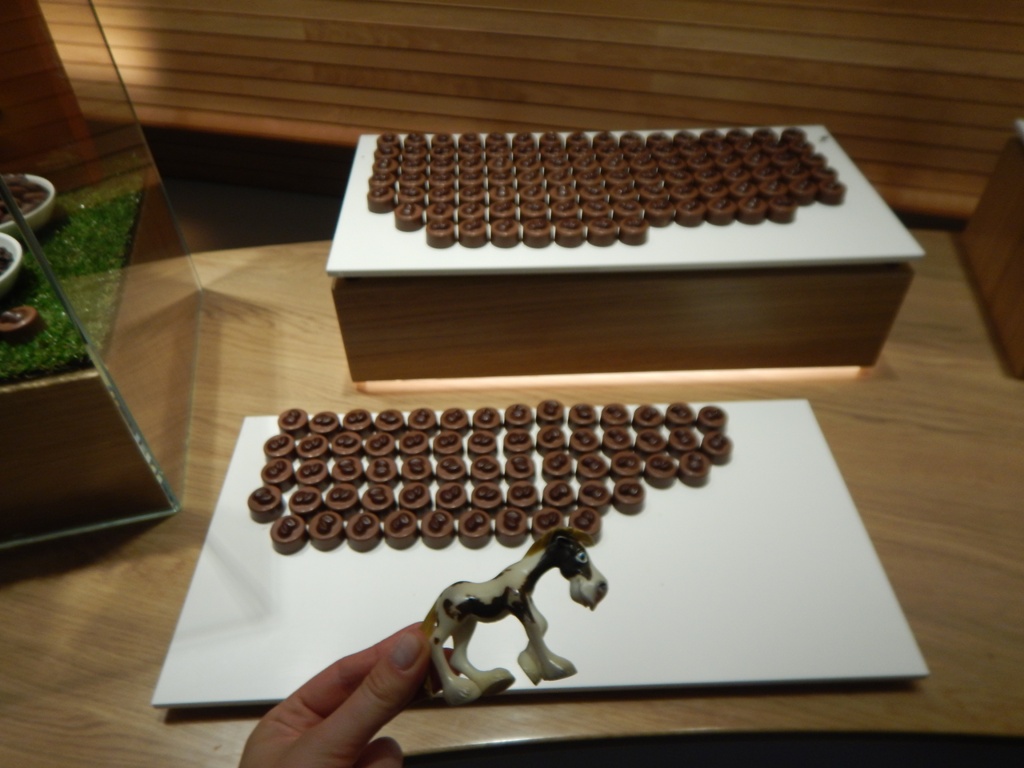
When your chocolate is ready, all you need is to think about your favourite add-ons. Fruits? Chocolate pills? Nuts? And why not all?
First, we need to pour the chocolate into the mould. Not to warm but still warm enough to be liquid.
Then simply drop all those mouth-watering additions.
Now our chocolate needs some winter vacation in a cool fridge. And finally it is done - the best chocolate ever. The one that we have made ourselves!
Showing posts with label factory. Show all posts
Saturday, 29 June 2019
Saturday, 24 December 2016
Transparent Factory
Have you ever wondered how luxury cars are made? Today we will have the opportunity to visit an amazing car factory - the Transparent Factory in Dresden. It owns its name to the material from which it was built - almost all the walls are made of glass!
The factory is large but is located relatively close to the city center in an area that used to be a fair area.
To limit the impact of the factory on the city, a special CarGo Tram was designed. It uses the regular tram rails and brings three times a day components from another site to the Transparent Factory.
Do you want to see the factory inside? Not only is it possible to enter inside but the factory offers a number of guided tours, available for many language and age groups.
As you see, the inside walls are also made of glass.
On the upper floors all stages of car manufacturing take place.
Here the so-called body-in-white arrive for the final assembly.
It is not allowed to take pictures inside but I took a few shots from a movie shown in the lobby. You can see how the seats are installed ...
... and doors are mounted.
The round-shaped tower houses ready-made cars awaiting for clients to pick them up.
The Transparent Factory is the birthplace of Volkswagen flagship car Phaeton.
Have you ever had the chance to sit in a car worth well over a hundred thousand euro?
The steering wheel made of well polished wood and high quality leather smells and feels like real luxury.
Though I must tell you honestly that out of all the cars that I have seen in Dresden I liked best that one.
It is a Horch 951, built in 1938 by the father of the Audi brand. It does not have ABS or safety belts. But looks just amazing.
Who knows, maybe one day I will be able to afford a car like this. For the time being, I will keep on travelling by all means available. Because travelling is the essence of my life.
The factory is large but is located relatively close to the city center in an area that used to be a fair area.
To limit the impact of the factory on the city, a special CarGo Tram was designed. It uses the regular tram rails and brings three times a day components from another site to the Transparent Factory.
Do you want to see the factory inside? Not only is it possible to enter inside but the factory offers a number of guided tours, available for many language and age groups.
As you see, the inside walls are also made of glass.
On the upper floors all stages of car manufacturing take place.
Here the so-called body-in-white arrive for the final assembly.
It is not allowed to take pictures inside but I took a few shots from a movie shown in the lobby. You can see how the seats are installed ...
... and doors are mounted.
The round-shaped tower houses ready-made cars awaiting for clients to pick them up.
The Transparent Factory is the birthplace of Volkswagen flagship car Phaeton.
Have you ever had the chance to sit in a car worth well over a hundred thousand euro?
The steering wheel made of well polished wood and high quality leather smells and feels like real luxury.
Though I must tell you honestly that out of all the cars that I have seen in Dresden I liked best that one.
It is a Horch 951, built in 1938 by the father of the Audi brand. It does not have ABS or safety belts. But looks just amazing.
Who knows, maybe one day I will be able to afford a car like this. For the time being, I will keep on travelling by all means available. Because travelling is the essence of my life.
Saturday, 16 July 2016
Maison Calliers
Everybody knows that Switzerland is the country of chocolate. Some weeks ago we have visited the Lindt factory outlet. Unfortunately, it was not possible to visit the factory itself. It left me with a feeling of disapointment. It took me some time to find a cure for this feeling but finally I was sucessful - dear friends, let me take you to Maison Cailliers.
Cailliers is a famous Swiss brand of chocolate, produced for over a century in Broc, near Gruyère. Since a couple of years, it is possible to visit the factory and take a tour to understand better how chocolate is made. Let's grab our choco-guides and off we go.
In the lobby, you can meet the two fathers of the Calliers chocolate. François-Louis Cailler was the first Swiss manufacturer of chocolate.
Henri Nestlé, the founder of Nestlé and the inventor of condensed milk is the second important person in the history of Calliers. The combination of the art of both gave the world the milk chocolate.
Because chocolate was not always a sweet milky melting treat as we know it today. Cocoa trees used to grow mainly in South America.
The Aztecs believed they were given to humans by their gods. Aztec gods were nothing close to nice so the way cocoa was prepared and drunk was bitter and strong.
It is Hernán Cortés who brought cocoa to Europe. Initially, it was considered by the church as a pagan drink, coming from the devil himself. A special letter from the pope was required to open the doors of European dining rooms for chocolate.
So do you know what is needed to make good chocolate? Of course cocoa beans. If you wish you can try to eat one. It is rather bitter.
Then comes the cocoa butter.
My favourite type of chocolate would require also milk. Did you know that the taste of milk depends on what the cows were eating? There is also a difference in the taste of summer milk and winter milk. The employees of Caillers are able to judge from the taste of the chocolate if it was made with summer or winter milk.
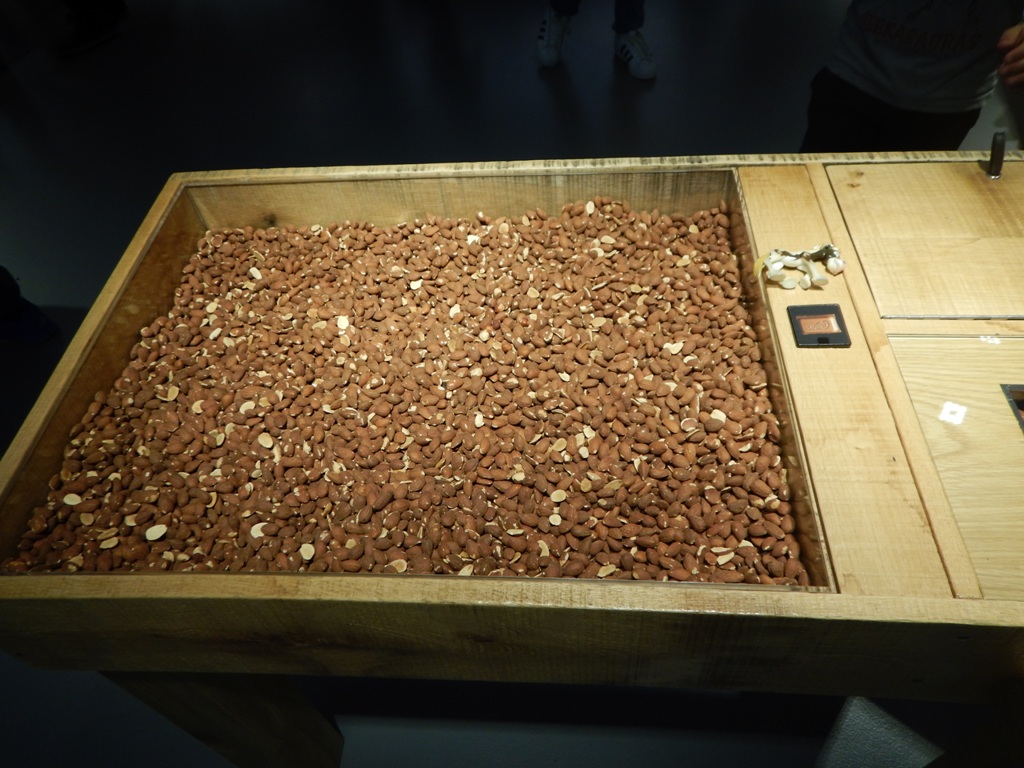
Last but not least, you can pimp up the chocolates with some additional ingredients. My favourite are almonds.
So how is the chocolate made? Everything starts here. In these huge devices the chocolate is mixed.
Here it is formed and cooled.
The smell is just awesome. Those tiny pieces of chocolate are called "Branches" and they are a spécialité of Calliers.
As a last step, they are packed into colourful packaging.
As we leave the manufacturing site, the smell of chocolate becomes even stronger. Yes, this is heaven on Earth - the tasting room.
Do not be shy, try these ones.
And those ones as well.
You can also try to make some chocolate yourself in the Atelier du Chocolat.
Unfortunately we did not book a session so we can only sneak through the window and admire young chocolatiers at work.
If you are still not fully filled with the brown gold, you can follow me to the factory shop. You will find there Calliers chocolates in all colours and tastes.
For those who look for something more special wait those friendly chocolate farm animals.
Before Calliers, chocolate was hand made. As a result, it was very expensive and available for aristocrats only. François-Louis Cailler invented a way of automated manufacturing of chocolate, making it accessible for everyone. I do not know what you think, but for me the man really deserved a Nobel Prize. Or at least a standing applause.
Cailliers is a famous Swiss brand of chocolate, produced for over a century in Broc, near Gruyère. Since a couple of years, it is possible to visit the factory and take a tour to understand better how chocolate is made. Let's grab our choco-guides and off we go.
In the lobby, you can meet the two fathers of the Calliers chocolate. François-Louis Cailler was the first Swiss manufacturer of chocolate.
Henri Nestlé, the founder of Nestlé and the inventor of condensed milk is the second important person in the history of Calliers. The combination of the art of both gave the world the milk chocolate.
Because chocolate was not always a sweet milky melting treat as we know it today. Cocoa trees used to grow mainly in South America.
The Aztecs believed they were given to humans by their gods. Aztec gods were nothing close to nice so the way cocoa was prepared and drunk was bitter and strong.
It is Hernán Cortés who brought cocoa to Europe. Initially, it was considered by the church as a pagan drink, coming from the devil himself. A special letter from the pope was required to open the doors of European dining rooms for chocolate.
So do you know what is needed to make good chocolate? Of course cocoa beans. If you wish you can try to eat one. It is rather bitter.
Then comes the cocoa butter.
My favourite type of chocolate would require also milk. Did you know that the taste of milk depends on what the cows were eating? There is also a difference in the taste of summer milk and winter milk. The employees of Caillers are able to judge from the taste of the chocolate if it was made with summer or winter milk.
Last but not least, you can pimp up the chocolates with some additional ingredients. My favourite are almonds.
So how is the chocolate made? Everything starts here. In these huge devices the chocolate is mixed.
Here it is formed and cooled.
As a last step, they are packed into colourful packaging.
As we leave the manufacturing site, the smell of chocolate becomes even stronger. Yes, this is heaven on Earth - the tasting room.
Do not be shy, try these ones.
And those ones as well.
You can also try to make some chocolate yourself in the Atelier du Chocolat.
Unfortunately we did not book a session so we can only sneak through the window and admire young chocolatiers at work.
If you are still not fully filled with the brown gold, you can follow me to the factory shop. You will find there Calliers chocolates in all colours and tastes.
For those who look for something more special wait those friendly chocolate farm animals.
Before Calliers, chocolate was hand made. As a result, it was very expensive and available for aristocrats only. François-Louis Cailler invented a way of automated manufacturing of chocolate, making it accessible for everyone. I do not know what you think, but for me the man really deserved a Nobel Prize. Or at least a standing applause.
Etykiety:
factory,
food,
Switzerland
Subscribe to:
Posts (Atom)