I am so excited to take you today to yet another new country. It is widely known as the Green Island and as long as I have landed, I had no doubts why. It is indeed very green and close to the water.

Actually, in some parts they are maybe even overdoing it with the green.

I am sure by now you all have guessed that today we will visit Ireland. Or to be more precise, its capital city - Dublin. Since Dublin is a city with a long history, you will not be surprised that is has a castle.

Nowadays, the Dublin Castle is the sear of the Irish government. But it used to belong to a king of course. Though for centuries the title was held by the English kings who did not reside in Dublin but sent there their governonr instead. Maybe this is why the statue of the Justice is facing the castle rather than the nation gathered outside the main gate.

If I was an English king, I would not miss the opportunity to spend some time here. Even more, if I was a royal heir in shorts.

The gardens of the Dublin Castle hide one special place. In Garda Memorial Garden, completed in 2009, the names of all members of the Gardaí (Irish Police) killed in the line of duty are inscribed on a roll of honour.

The various sculptures are meant to remind the visitors that premature death tears families and society apart, leaving deep wounds.

Not far from the Dublin Castle, you will find the Irish parliament.

As we move on, we reach the Trinity College, founded in 1592 by Queen Elizabeth I .

Ireland witnessed in its history many religious turmoils. For many years, Catholics could not pass that gate. But today we can enter inside, irrespective of your confession.

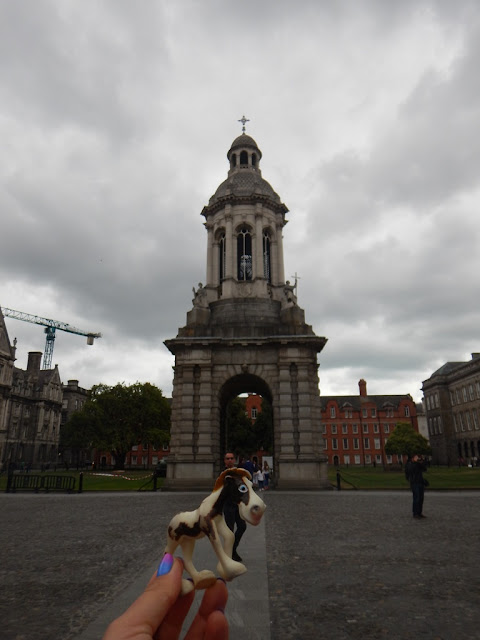
In the center of the College grounds you will find a bell tower called Campanile. Do not ask me why a university needs a bell tower, maybe to wake up students who snore too loudly during classes.
The Trinity College is considered the best university in Ireland. It is proud of its many famous graduates. One of them immortalised Dublin of his times in the famous book Ulysses. And Dublin pays back his honours to James Joyce by offering him a statue.

But Dubliners do not commemorate only people of distinguished talents. They have also made a monument for a common fishmonger called Molly Malone. You can easily see which part of the monument is the most appreciated one.

And if you do not know Molly, you need to turn the volume up.
As we move through the narrow streets ...

... we will reach the river Liffey. It is crossed by many bridges, some of which are for pedestrian traffic only.

On the other side of the river we need to take a look at the Spire of Dublin. If you have no clue what it represents and what is its connection to Dublin, you are likely to find many Dubliners of the same opinion. Though others say that the Eiffel Tower was hated for decades as well.

The Spire stands next to the main Post Office of Dublin (hello, my Postcrossing friends!).

I propose that we cross the river again. Those who wish can stay in one of the many pubs in the Temple Bar district.

Those who want to reconnect with the green side of the Green Island can join me into Stephen's Green, one of the city's many parks.

And next week, I will take you to one special place in Dublin, where Irish people celebrate the man who is painting the whole world green on one specific day of the year.

Actually, in some parts they are maybe even overdoing it with the green.

I am sure by now you all have guessed that today we will visit Ireland. Or to be more precise, its capital city - Dublin. Since Dublin is a city with a long history, you will not be surprised that is has a castle.

Nowadays, the Dublin Castle is the sear of the Irish government. But it used to belong to a king of course. Though for centuries the title was held by the English kings who did not reside in Dublin but sent there their governonr instead. Maybe this is why the statue of the Justice is facing the castle rather than the nation gathered outside the main gate.

If I was an English king, I would not miss the opportunity to spend some time here. Even more, if I was a royal heir in shorts.

The gardens of the Dublin Castle hide one special place. In Garda Memorial Garden, completed in 2009, the names of all members of the Gardaí (Irish Police) killed in the line of duty are inscribed on a roll of honour.

The various sculptures are meant to remind the visitors that premature death tears families and society apart, leaving deep wounds.

Not far from the Dublin Castle, you will find the Irish parliament.

As we move on, we reach the Trinity College, founded in 1592 by Queen Elizabeth I .

Ireland witnessed in its history many religious turmoils. For many years, Catholics could not pass that gate. But today we can enter inside, irrespective of your confession.

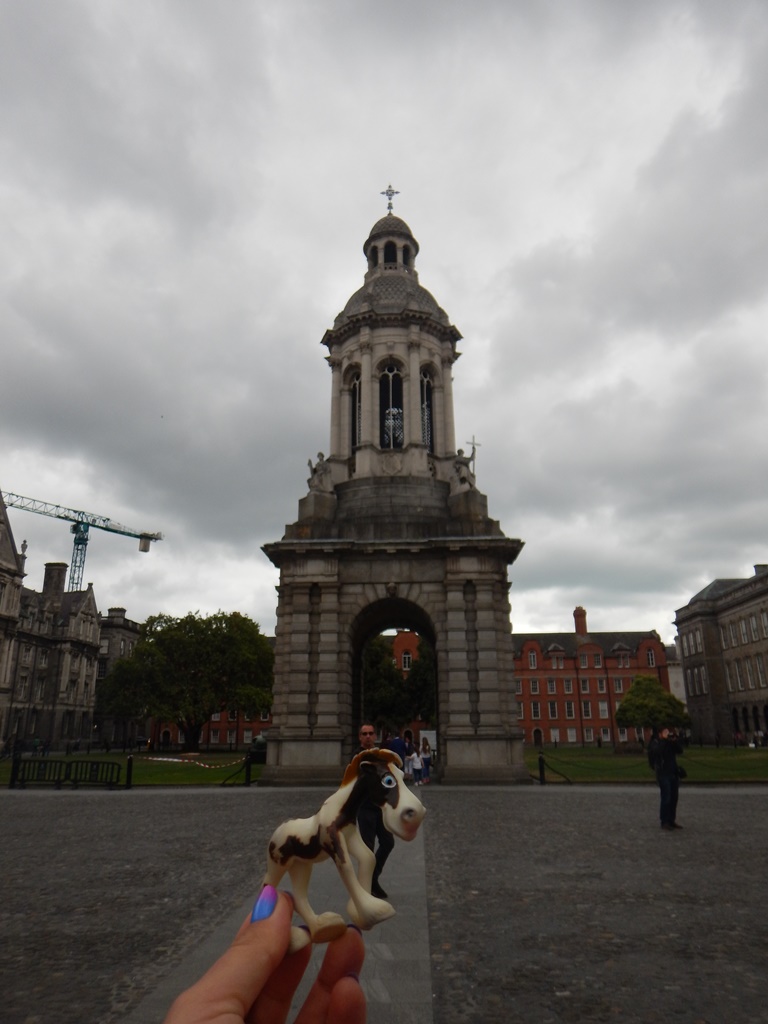
In the center of the College grounds you will find a bell tower called Campanile. Do not ask me why a university needs a bell tower, maybe to wake up students who snore too loudly during classes.
The Trinity College is considered the best university in Ireland. It is proud of its many famous graduates. One of them immortalised Dublin of his times in the famous book Ulysses. And Dublin pays back his honours to James Joyce by offering him a statue.

But Dubliners do not commemorate only people of distinguished talents. They have also made a monument for a common fishmonger called Molly Malone. You can easily see which part of the monument is the most appreciated one.

And if you do not know Molly, you need to turn the volume up.
As we move through the narrow streets ...

... we will reach the river Liffey. It is crossed by many bridges, some of which are for pedestrian traffic only.

On the other side of the river we need to take a look at the Spire of Dublin. If you have no clue what it represents and what is its connection to Dublin, you are likely to find many Dubliners of the same opinion. Though others say that the Eiffel Tower was hated for decades as well.

The Spire stands next to the main Post Office of Dublin (hello, my Postcrossing friends!).

I propose that we cross the river again. Those who wish can stay in one of the many pubs in the Temple Bar district.

Those who want to reconnect with the green side of the Green Island can join me into Stephen's Green, one of the city's many parks.

And next week, I will take you to one special place in Dublin, where Irish people celebrate the man who is painting the whole world green on one specific day of the year.


